
swiss alpine cottage chamanna da boval
competition . 2025
pontrasse . switzerland
the swiss alpine cottage "chamanna da boval" is located in the impressive mountain and glacier scenery of the bernina range. an architecture competition was launched to replace the aging cottage, which no longer meets operational, technical, and safety requirements.
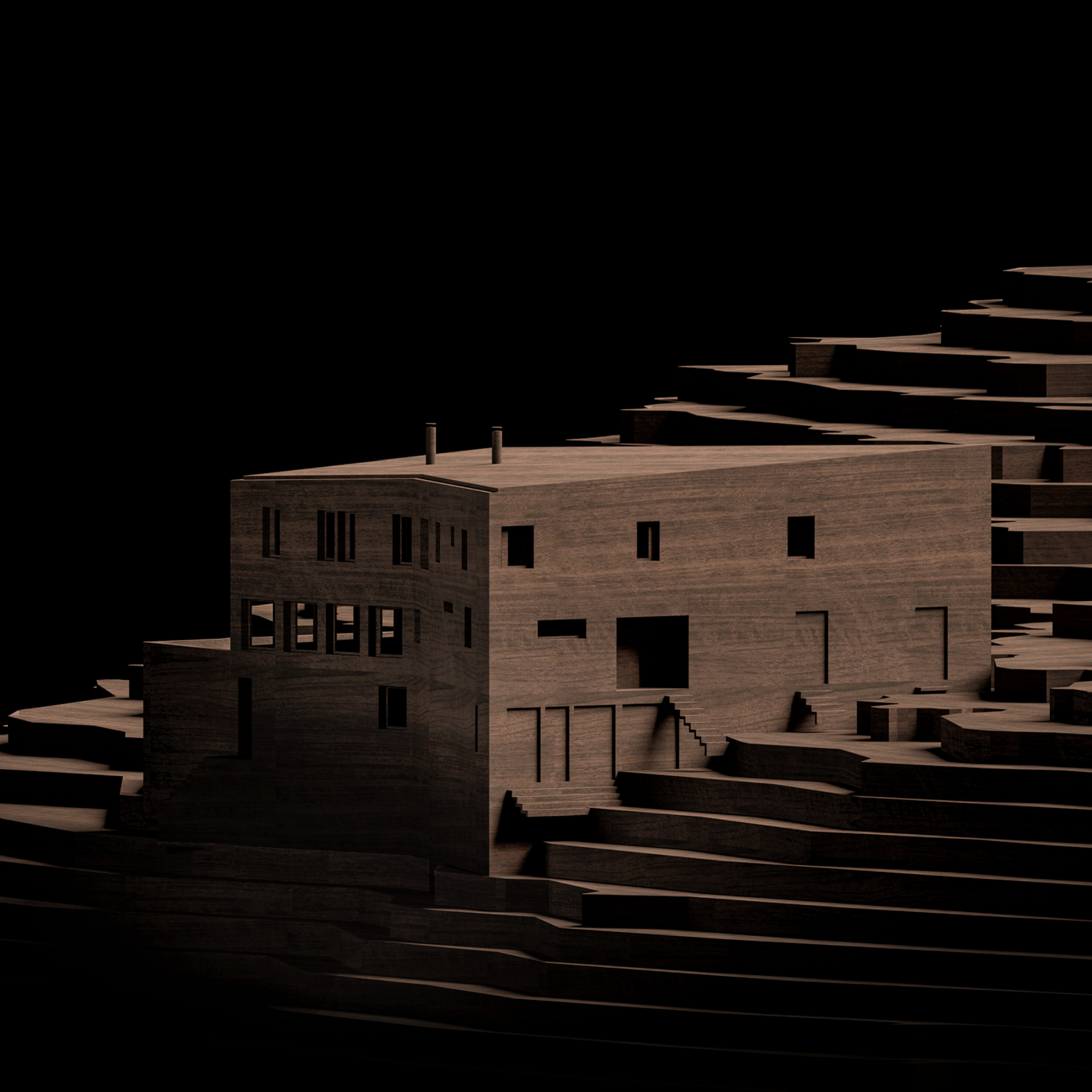


PROJECT IDEA | LANDSCAPE INTEGRATION
The new Chamanna da Boval will be located on what today appears to be an open and inhospitable plateau between the slope and the rocky outcrop. The new, striking structure develops along the existing topography and nestles naturally and confidently into its surroundings. By shifting the new building over the existing slope edge and defining the distinctive building form, a practical, simple organization of the spaces can be achieved. The unique, high-alpine setting with its distinctive character will be strengthened and clarified by the new building after the demolition of the existing facility. The landscape, the hut, and the terrace merge into a single unit.
ACCESS & ORGANIZATION
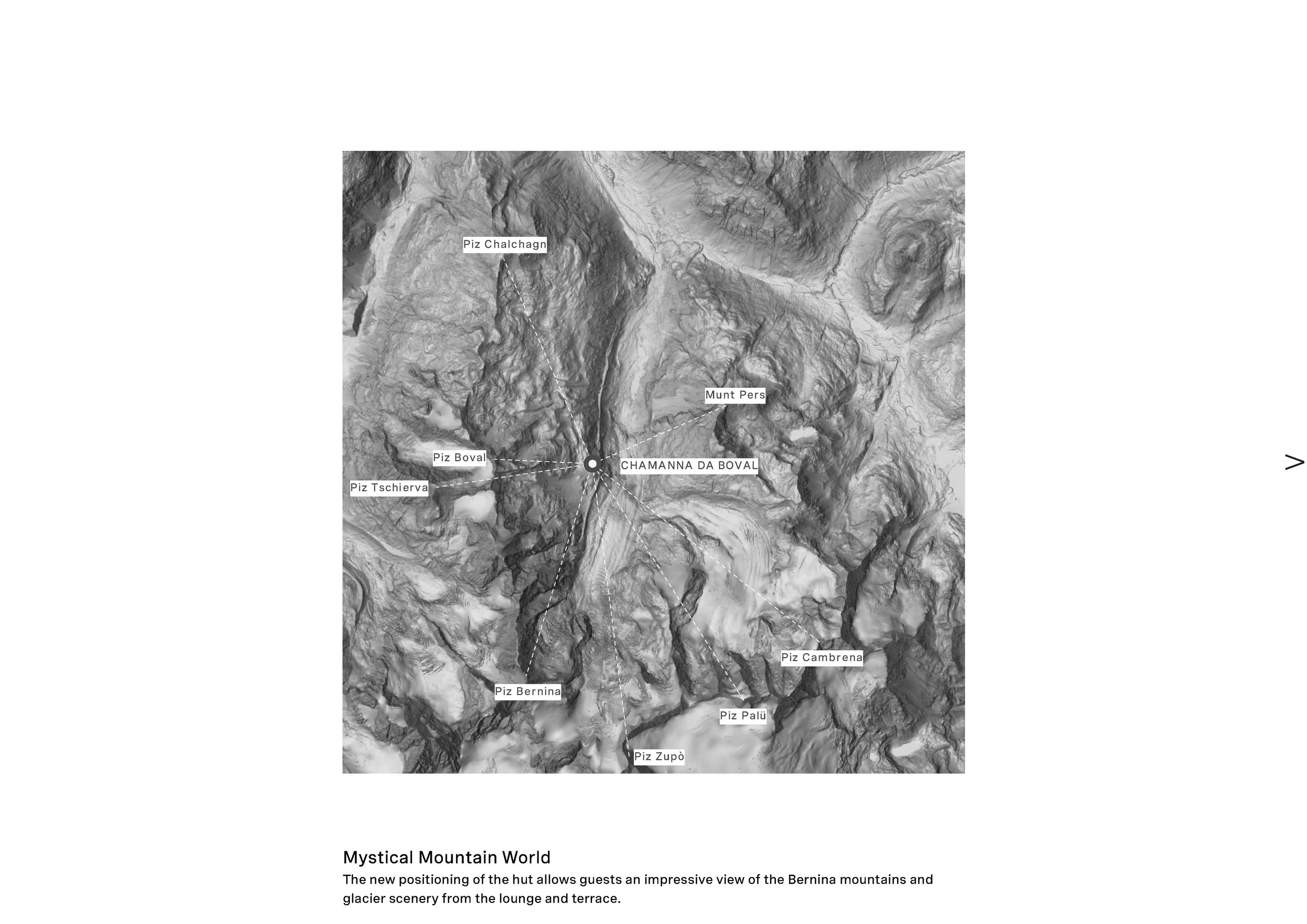
As before, the Chamanna da Boval is accessed from the south. The new main entrance to the hut is located on the lowest level of the building and is accessed by arriving guests via an external staircase. Skis, boots, and wet clothes can be left on this level. The staircase, which offers fascinating views of the valley and the sky, leads to the ground floor, where the reception is located. Directly adjacent to the reception are the guest lounge, as well as the toilets and washrooms. The guest lounge is the warm living room of the hut. Its layout allows for a spectacular, three-sided panoramic view of the imposing mountain formations. All bedrooms are located on the top floor, to the south for guests and the north for the staff. The family room can be assigned to either group as needed. An internal staircase connects the private staff area to the work spaces, which are served by the helipad to the north. The kitchen forms the heart of the hut, so guests' well-being can be ensured with minimal personnel. The staff lounge is located on the slope side and offer views to the mountains through a large window.



CONSTRUCTION & MATERIALS
The entire building is constructed from timber frame elements prefabricated in the valley. To ensure the most efficient and economical construction possible, the timber elements are optimized for helicopter transport. The shingled facade made of larch wood from the Engadin region is installed on site and gives the house a refined and archaic character. The roof is robustly and permanently protected with a ventilated chrome-nickel-molybdenum steel double standing seam sheet, giving the hut its distinctive character through its crown shimmering in the sunlight. The small-cell structure of the upper-floor bedrooms allows for a relatively slim and efficient snow-bearing ceiling. Individual walls serve as girders that help bridging the larger rooms on the ground floor. The timber structure rests on a steel beam frame, supported by individual concrete foundations and anchored to the bedrock against wind loads. The foundation gaps along the facade are filled with dry stone walls made on site, "grounding" the structure. Only pollutant-free materials are used. Components are bolted together interchangeably wherever possible.


CONSTRUCTION process
After the new building is completed, the dismantling of the old hut will begin. The asbestos-containing façade screen will be properly disposed of, while the timber structure will be cut to size to form a new patchwork terrace floor. Surplus, pollutant-free wood will be prepared as firewood for the hut's operations. Finally, the workers' quarters and the existing terrace will be demolished, the site re-naturalized, and the stones reused to fill the foundation gap of the new hut.
ENERGY & ECOLOGY
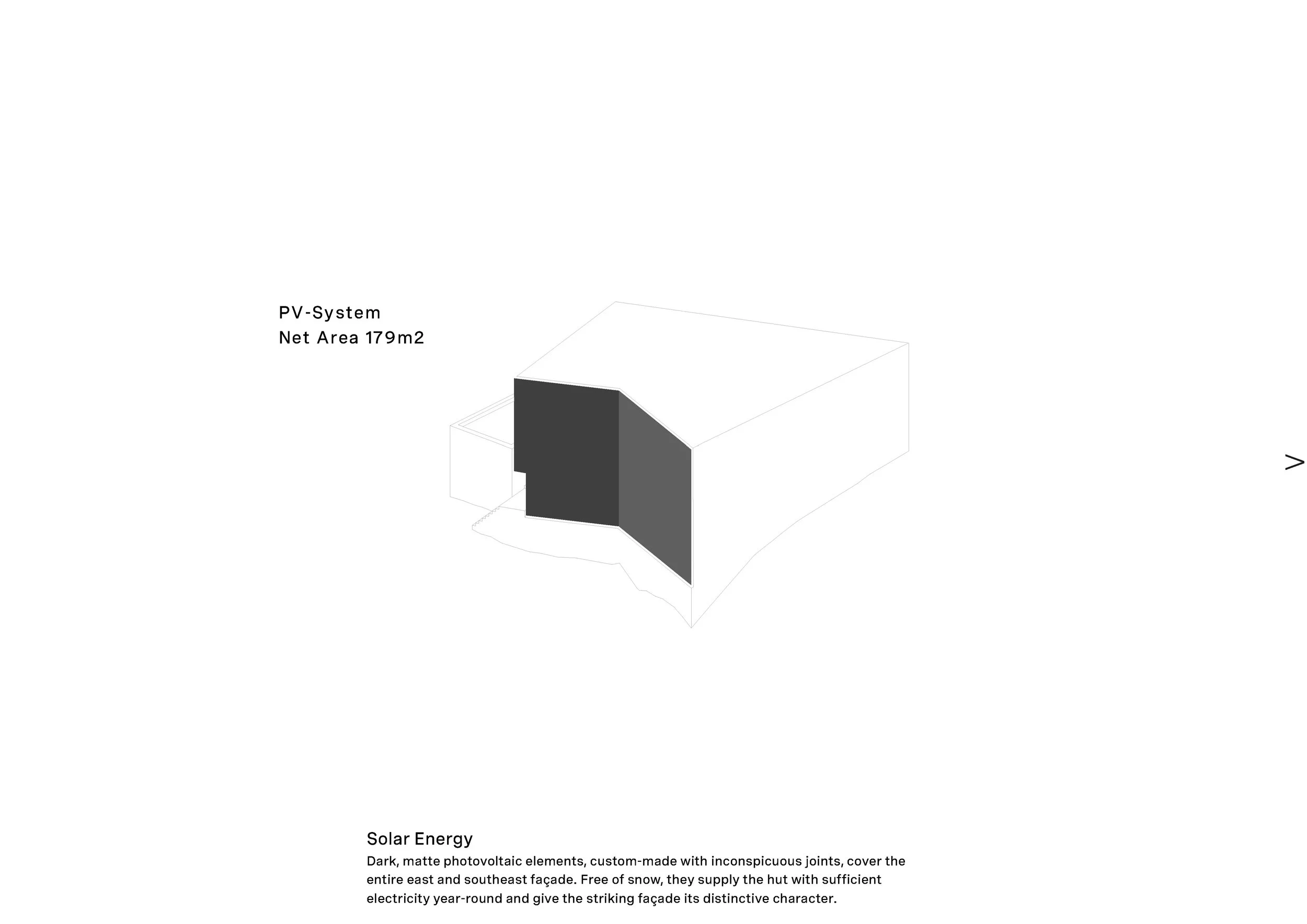
The aim is to implement the latest building technology for cabins. High-quality thermal insulation combined with a snow-covered roof and rooms as buffers during the cold season, passive and active solar energy utilization, and the use of demolition timber, wood as the main building material, and local stone lead to an excellent energy and ecology balance